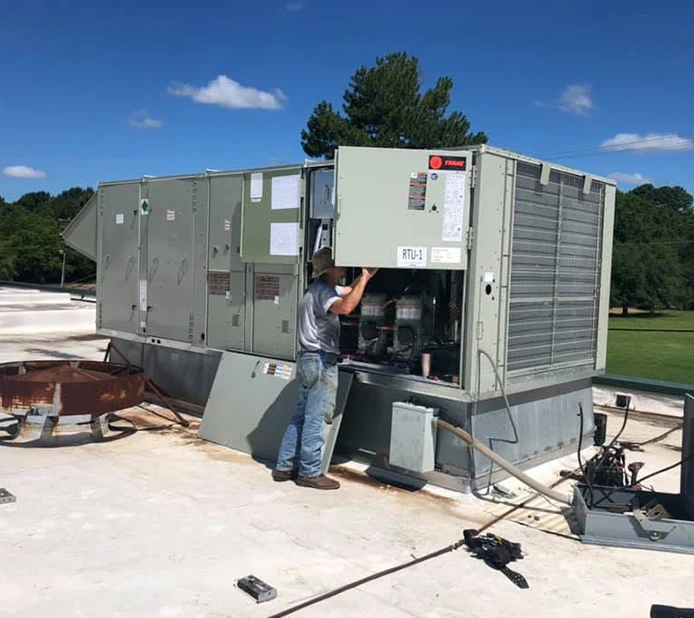
A rooftop unit rarely fails without warning. Coils load up with dust and pollen, belts stretch, drain lines clog, and refrigerant charge drifts a little each season. A commercial HVAC maintenance contract puts a technician on a schedule to catch those changes before they turn into a no-cool call in July. This guide explains what a contract covers, how pricing works, which type of agreement fits your building, and what to ask before you sign.
Key Takeaways
- A maintenance contract sets the visit schedule, the task list, and how repairs are priced.
- There are three main plan levels: preventive maintenance, full labor, and full coverage.
- Price depends on the number of units, their age, visit frequency, and access.
- Most buildings need at least two visits a year; Mississippi restaurants often need four.
- Always compare written task lists, not just the price.
What Is a Commercial HVAC Maintenance Contract?
A commercial HVAC maintenance contract is a written agreement between a building owner or manager and an HVAC contractor. It sets how often technicians visit, which equipment they service, what tasks they perform on each visit, and how repairs are priced when something needs to be fixed. You will also hear it called a commercial HVAC service agreement, a preventive maintenance agreement, or a planned maintenance contract. The names differ, but the goal is the same: steady, scheduled care instead of waiting for equipment to break.
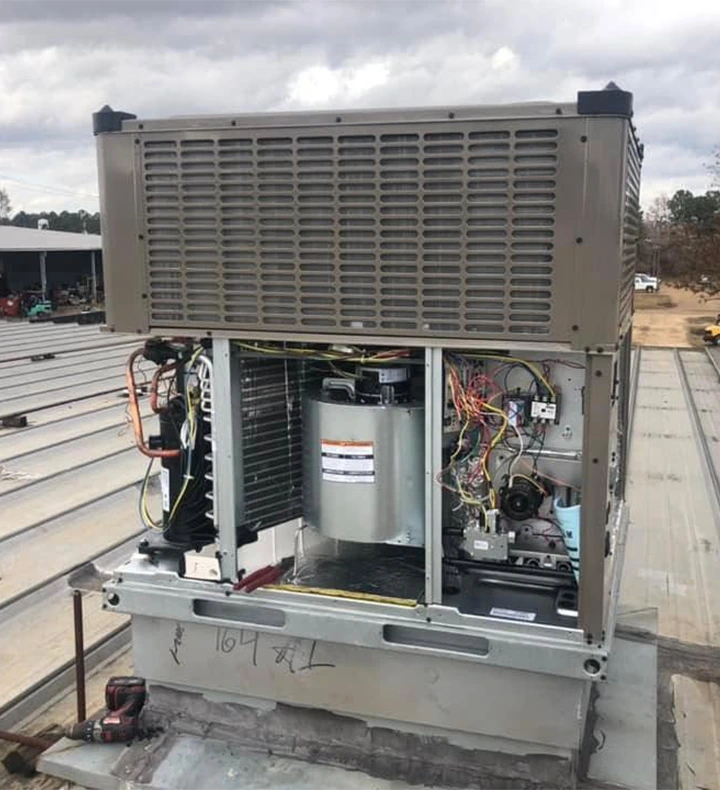
Most agreements cover the equipment that keeps a commercial HVAC system running: rooftop package units, split systems, air handlers, heat pumps, furnaces, exhaust fans, and building controls.
Many restaurants and grocery stores also add refrigeration units and ice machines to the same agreement, so one team looks after every piece of mechanical equipment in the building.
What a Commercial HVAC Service Agreement Includes
A good agreement lists every task in writing. If a task is not in the contract, assume it is not included. On a typical preventive maintenance visit, a technician will complete this checklist:
That written report matters more than many owners realize. It gives you a running history of each unit, which makes budgeting, warranty claims, and replace-or-repair decisions much easier.
Types of HVAC Maintenance Contracts
Contracts generally fall into three levels. The right one depends on the age of your equipment, how much risk you can absorb, and how predictable you need your costs to be.
| Plan Type | What Is Covered | Best For |
|---|---|---|
| 1. Preventive Maintenance | Scheduled inspections, cleaning, and adjustments. Repairs billed separately, often at a discount. | Newer equipment in good condition |
| 2. Full Labor | Scheduled maintenance plus labor on covered repairs. You pay for parts. | Mid-life equipment with more frequent repairs |
| 3. Full Coverage | Maintenance, labor, parts, and emergency service for covered equipment. | Older systems and tight, fixed budgets |
Full coverage costs the most up front, but it turns unpredictable repair bills into a fixed annual number. Preventive-only plans cost the least and suit buildings with newer equipment that rarely needs repairs.
Commercial HVAC Maintenance Contract Cost
There is no single price for a commercial HVAC maintenance contract, because no two buildings have the same equipment. A contractor builds the quote from a walk-through of your property. These six factors move the price the most:
A strip-center store with one rooftop unit costs far less to maintain than a school with twenty.
Older systems need more attention, more adjustments, and more parts.
Quarterly visits cost more than twice-a-year visits, but they catch more problems.
Restaurants, 24-hour sites, and coastal buildings put more stress on equipment.
Units that need a lift, crane, or roof hatch take more time to service.
Preventive only, full labor, or full coverage changes the price the most.
Pro Tip: When you compare quotes, put the task lists and visit counts side by side. A lower price with fewer visits and fewer tasks is not a better deal.
How Often Should Commercial HVAC Systems Be Serviced?
Most commercial systems should be serviced at least twice a year: once in spring before cooling season and once in fall before heating season. In Mississippi, long, humid summers keep equipment running for most of the year, so many buildings benefit from more frequent visits.
| Building Type | Recommended Visits per Year |
|---|---|
| Offices and retail stores | 2 (spring and fall) |
| Schools, churches, and clinics | 2 to 4 |
| Restaurants and commercial kitchens | 4, with monthly filter changes |
| 24-hour facilities and older equipment | 4 or more |
Spring visits focus on cooling and on preventing air conditioning repair calls during the first heat wave. Fall visits get furnaces and heat pumps ready, which keeps your heating services needs predictable through winter.
5 Benefits of an HVAC Preventive Maintenance Contract
How to Choose a Commercial HVAC Maintenance Contractor
Before you sign, ask each contractor these seven questions. A contractor who answers clearly and puts everything in writing is a contractor you can hold to the agreement.
- Are you licensed with the Mississippi State Board of Contractors, and are your technicians EPA Section 608 certified?
- Exactly which tasks are performed on each visit, and will I get a written report?
- How many visits per year are included, and when are they scheduled?
- What response time do agreement customers get for emergency calls?
- Are repairs discounted, and are parts included or billed separately?
- Can refrigeration, ice machines, and other equipment be added to the same agreement?
- What is the term, and how is the agreement renewed or cancelled?
Common Questions About Commercial HVAC Maintenance Contracts
Is a commercial HVAC maintenance contract worth it?
For most businesses, yes. One avoided compressor failure or one prevented weekend shutdown usually covers a large share of the annual cost, and the written records make every later decision easier.
What is the difference between a service agreement and a maintenance contract?
The terms are often used the same way. Some contractors use “service agreement” for plans that include repair labor or parts, and “maintenance contract” for inspection-only plans. Always read the task list rather than relying on the name.
Can I add refrigeration equipment to my HVAC contract?
Yes. Walk-in coolers, freezers, reach-ins, and ice machines can usually be added. If a cooler is already running warm, start with our guide to walk-in cooler repair.
How long does a maintenance visit take?
It depends on the number of units. A single rooftop unit may take an hour or two, while a large building can take a full day or more.
Get a Commercial HVAC Maintenance Contract in Mississippi
Tom’s Commercial and Residential Refrigeration & Air has maintained equipment for Mississippi businesses for 62 years. Every agreement is built around the equipment you actually have, with clear task lists and written reports.