
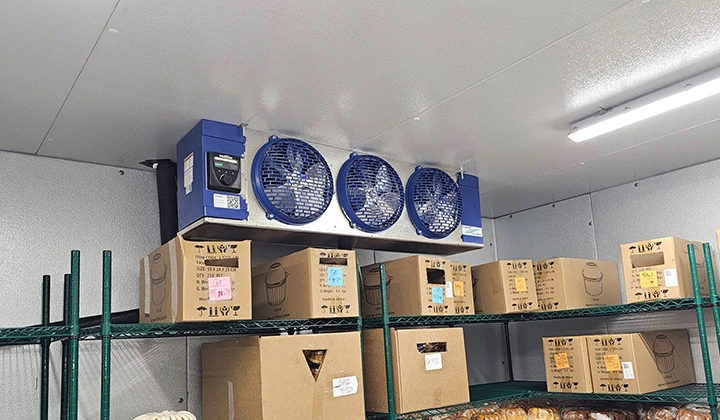
When a walk-in cooler starts running warm, every degree puts food, inventory, and money at risk. The good news is that most warm walk-ins are not a dead compressor. They are an airflow, door, or defrost problem that a technician can find and fix quickly. This guide covers the most common reasons a walk-in cooler is not cooling, what your staff can safely check, when to call for walk-in cooler repair, and how to keep the problem from coming back.
Key Takeaways
- Keep walk-in coolers at 35°F to 38°F and freezers at 0°F or colder.
- Most warm walk-ins come from dirty coils, door leaks, ice, or failed fans.
- A refrigerant leak must be repaired by a certified technician, not just recharged.
- Staff can safely check settings, doors, airflow, and the outdoor unit.
- Twice-a-year maintenance prevents most emergency calls.
What Temperature Should a Walk-In Cooler Be?
The FDA Food Code requires cold-held foods to stay at 41°F or below. That is why most walk-ins are set a few degrees lower, to give a safety margin during busy hours and deliveries.
If your cooler reads 41°F or higher for more than a short door-open period, treat it as a problem that needs attention today, not next week.
Signs You Need Walk-In Cooler Repair
Any one of these signs is worth a call. Two or more at the same time usually means the box is close to losing product.
9 Common Reasons a Walk-In Cooler Is Not Cooling
Every walk-in cooler repair should start with a diagnosis, not a guess. These are the causes our technicians check, roughly in the order they show up most often.
| # | Cause | What You Notice | Typical Fix |
|---|---|---|---|
| 1 | Dirty condenser coil | Unit runs hot, trips off | Coil cleaning |
| 2 | Failed condenser fan | Outdoor fan not spinning | Motor or capacitor |
| 3 | Worn door gaskets or closers | Frost at the door, warm spots | Gasket, hinge, or closer |
| 4 | Iced evaporator coil | Weak airflow, ice on coil | Defrost plus root cause |
| 5 | Defrost failure | Ice keeps returning | Heater, timer, or switch |
| 6 | Evaporator fan failure | Some shelves warm first | Fan motor |
| 7 | Clogged drain line | Water on the floor | Clear line, check heater |
| 8 | Thermostat or controller | System not calling for cooling | Sensor or control |
| 9 | Refrigerant leak or compressor | Long run time, warm box | Leak repair or compressor |
1. Dirty Condenser Coil
The condenser releases the heat removed from inside the box. When the coil is coated with dust, grease, or cottonwood, heat cannot escape. Head pressure climbs, the compressor works harder, and it may shut off on a safety. This is one of the most common causes of a warm walk-in, and one of the easiest to prevent.
2. Failed Condenser Fan Motor
If the condenser fan stops turning, the result looks a lot like a dirty coil: high pressure, overheating, and a compressor that trips off. Outdoor units in Mississippi heat and humidity wear fan motors faster than units in mild climates.
3. Worn Door Gaskets, Hinges, or Closers
Torn gaskets, sagging doors, and weak door closers let warm, humid air flow into the box all day. That moisture freezes on the evaporator coil and blocks airflow. Missing strip curtains and doors left open during deliveries cause the same problem.
4. Iced Evaporator Coil
When ice covers the evaporator, air cannot pass through it, and the box warms even though the system is running. Ice usually points to a deeper cause, such as a door problem, a failed defrost part, low refrigerant, or a stopped fan.
5. Defrost Problems
Walk-in freezers rely on defrost heaters, timers, or controllers to clear ice from the coil on a schedule. Coolers often use an off-cycle defrost instead. A failed heater, timer, or termination switch lets ice build until the coil is blocked.
6. Evaporator Fan Motor Failure
The evaporator fans move cold air through the box. If one stops, some shelves warm up first. If all of them stop, the whole cooler warms quickly while the coil freezes solid.
7. Clogged Drain Line
Defrost water has to drain out of the box. A clogged or frozen drain line backs water into the pan, where it refreezes, blocks the coil, or spills onto the floor and creates a slip hazard.
8. Thermostat or Controller Issues
A failed sensor, a bad thermostat, or a controller set to the wrong temperature can stop the system from calling for cooling. It is one of the first things a technician checks, because it is quick to confirm.
9. Refrigerant Leak or Compressor Problem
Low refrigerant reduces cooling capacity and shows up as a long run time with a warm box. A leak must be found and repaired by an EPA Section 608 certified technician, not just recharged. Compressors usually fail from stress such as high head pressure or poor airflow, so the root cause has to be fixed as part of any commercial refrigeration repair.
What to Check Before Calling for Walk-In Cooler Repair
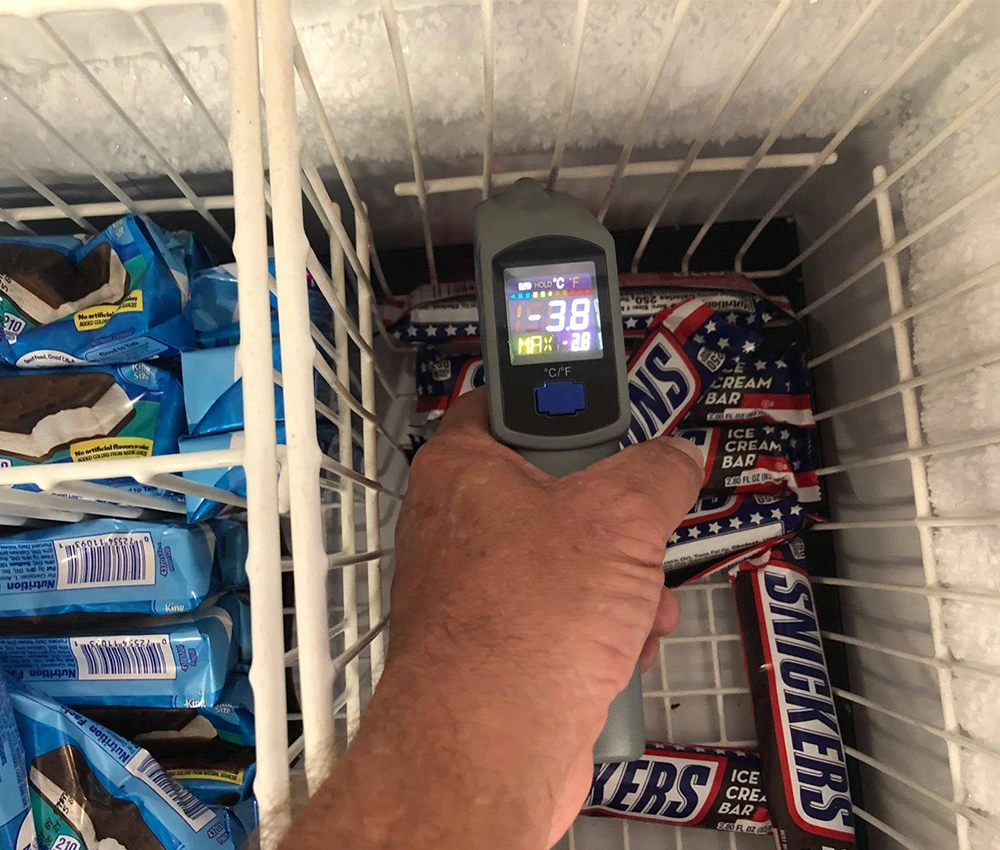
These six quick checks are safe for staff and can save a service call:
Warning: Do not chip ice off a coil with a tool, and do not add refrigerant yourself. Both can turn a small repair into a large one.
Walk-In Freezer Repair: What Is Different?
Walk-in freezers have the same basic parts as coolers but run much colder, so defrost systems, heater circuits, and door frame heaters play a bigger role. A freezer door that will not seal, ice forming on the floor, or frost building around the frame often points to a failed door heater or a defrost problem. Because freezers store high-value inventory, a warm freezer should be treated as an emergency.
Walk-In Cooler Repair or Replacement?
- The problem is a coil, fan, gasket, drain, or control
- The condensing unit is in good shape
- Breakdowns are rare
- The condensing unit is near the end of its life
- It uses an older refrigerant that is costly to service
- Repairs are frequent or panels are damaged
If replacement is the better choice, a technician can size and install new refrigeration units that match your box and your daily load.
Walk-In Cooler Maintenance Tips
The cheapest walk-in cooler repair is the one you never need. A few simple habits prevent most of the problems above.
- Clean condenser coils on a regular schedule, more often in kitchens and dusty areas.
- Inspect door gaskets, hinges, closers, and strip curtains monthly.
- Keep a few inches of space around the evaporator so air can circulate.
- Check and log box temperatures at every shift.
- Keep drain lines clear and check that drain line heaters work in freezers.
- Schedule professional maintenance at least twice a year.
Many restaurants and grocery stores put their walk-ins under a commercial HVAC maintenance contract, so the same technicians service the coolers, freezers, and HVAC on one schedule.
Busy kitchens often have the same warning signs on their ice equipment, so add ice machine repair checks to the same visit when your ice output drops.
Common Questions About Walk-In Cooler Repair
Why is my walk-in cooler running but not cooling?
The most common causes are a dirty condenser coil, an iced evaporator, a stopped fan motor, or a door that is not sealing. Low refrigerant and controller problems are also possible.
Why is there ice in my walk-in cooler?
Ice usually forms when warm, humid air leaks in through worn gaskets or open doors, or when the defrost system or evaporator fans are not working.
How long can food stay in a warm walk-in?
Follow your local health code and food safety plan. If food has been above 41°F, check with your manager or health inspector before serving it.
How much does walk-in cooler repair cost?
It depends on the cause. Cleaning a coil, clearing a drain, or replacing a gasket costs far less than replacing a fan motor, a defrost part, or a compressor. A technician should diagnose the problem and give you the price before any work begins.
How often should a walk-in cooler be serviced?
At least twice a year for most businesses, and quarterly for busy kitchens or older equipment.
Fast Walk-In Cooler Repair in Mississippi
For 62 years, Tom’s Commercial and Residential Refrigeration & Air has kept Mississippi coolers and freezers cold. Our technicians find the real cause, explain it clearly, and give you the price before work begins.